
Condensate Pots
Stable reference legs for steam-service differential pressure measurement.
View Specifications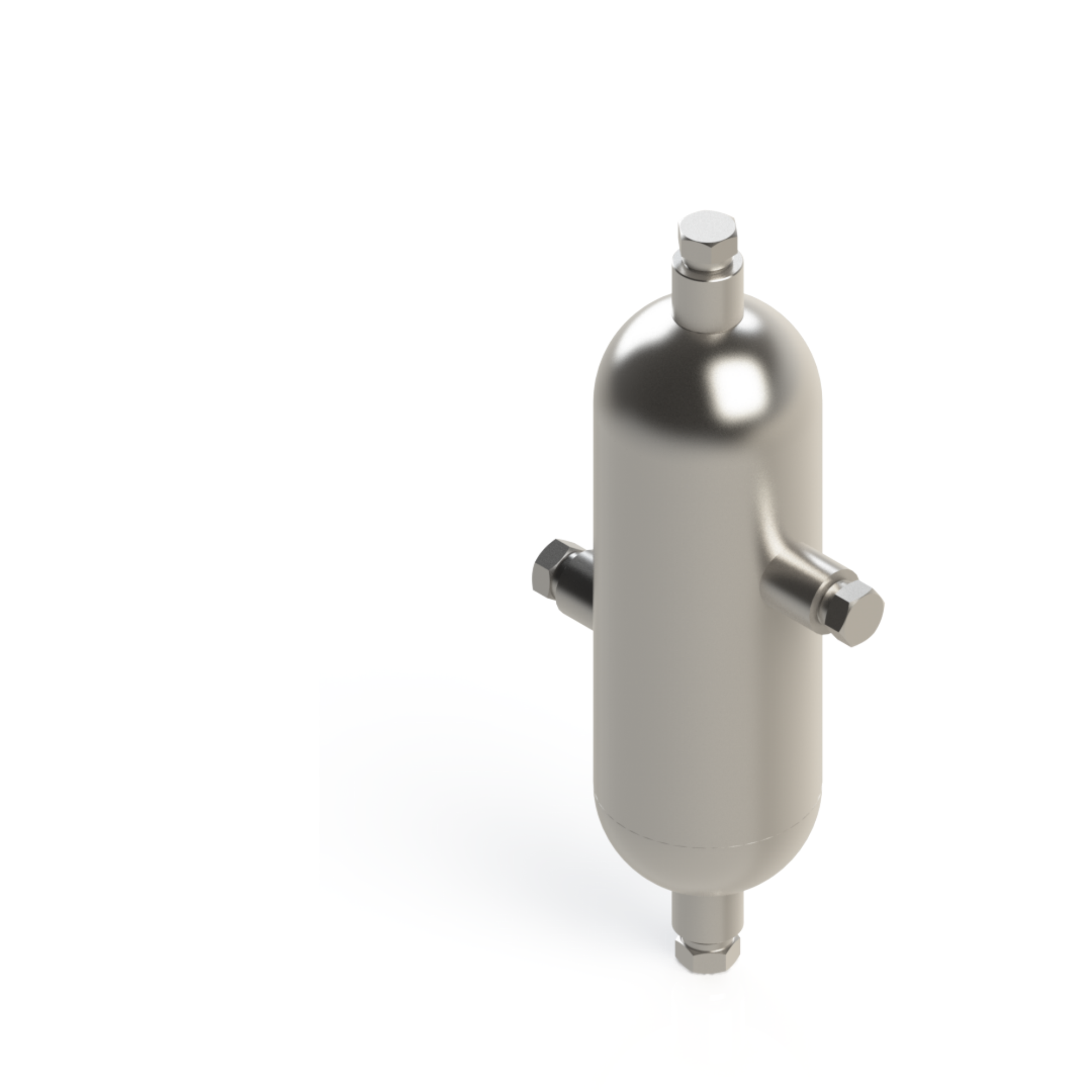
The Condensate Pot, also called a Steam Pot or Condensate Chamber, is a small vessel installed in the impulse line of a differential pressure (DP) measurement system on steam service. Steam condenses inside the pot and forms a constant liquid leg (water seal) of fixed height. This does two things: it keeps hot steam from reaching the transmitter, and it keeps the liquid leg equal on both sides of the DP measurement. When the pots are installed at the same elevation on both impulse lines, the liquid legs cancel each other out, so the transmitter reads only the true differential pressure. Condensate pots are used with orifice plates, venturis, and nozzles for steam flow measurement, and with DP level transmitters on boiler drums and steam-heated vessels. They are supplied with vent, drain, and fill connections as required, in a range of materials, pressure ratings, and end connections.
Bhavyam offers all condensate pots under the BETFITT range of products. Design & engineering is done as per global standards to meet challenging process demands. Manufacturing of all condensate pots is carried out as per ASME B31.3/ ASME Section VIII Div. 1/ ASME B16.5/ ASME B16.11/ ASME B1.20.1/ IBR standards.
Specifications
| Product type | Condensate pot / steam pot / condensate chamber |
| Materials | Carbon steel, SS 304, SS 304L, SS 316, SS 316L, Alloy steel, and others on request |
| Pot size | 2" / 3" / 4" diameter; and others on request |
| Process connection | 1/2" / 3/4" / 1"; and others on request |
| Testing | PMI, Hydrotest, Dye Penetration Test, Radiography, and others on request. |
Applications we serve.
- Steam flow measurement — used with orifice plates, venturis, and nozzles to keep a stable liquid leg in the impulse lines.
- Boiler drum level measurement — reference leg for DP level transmitters on high-pressure steam drums.
- Deaerators and feedwater heaters — level and pressure measurement on steam-heated equipment.
- Steam headers and distribution lines — DP and pressure measurement in power plant and process steam networks.
- Heat exchangers and reboilers — level and flow instrumentation on the steam side.
- Power generation — steam turbine, boiler, and auxiliary steam instrumentation.
- Refineries and petrochemical plants — instrumentation on process steam and steam-heated services.
- Instrument protection — shields transmitters and impulse lines from high-temperature steam and thermal stress.
Frequently asked questions.
Why is a condensate pot needed in steam service?
Transmitters and impulse tubing cannot be exposed directly to high-temperature steam. A condensate pot lets the steam condense into water, which forms a liquid seal that protects the transmitter from the heat. It also keeps the impulse lines filled with liquid at a fixed height, so the measurement is stable and repeatable.
How should condensate pots be installed?
For DP flow measurement, install the two pots at exactly the same elevation, close to the process taps and above the transmitter. This makes the liquid legs equal on both sides, so their static heads cancel out and the transmitter reads only the differential pressure across the primary element. Unequal heights cause a measurement error. Impulse lines should slope continuously and be free of air pockets, and the pots should be filled with water before start-up.
Need help choosing the right configuration?
Share your process data — fluid, line size, pressure and temperature — our engineers respond with a sized, documented quotation