
Carrier Ring Orifice Assembly
A differential pressure flow measurement device with the orifice plate mounted inside a carrier ring between standard pipe flanges — quick inspection, cleaning, or replacement without disturbing the pipe flanges.
View Specifications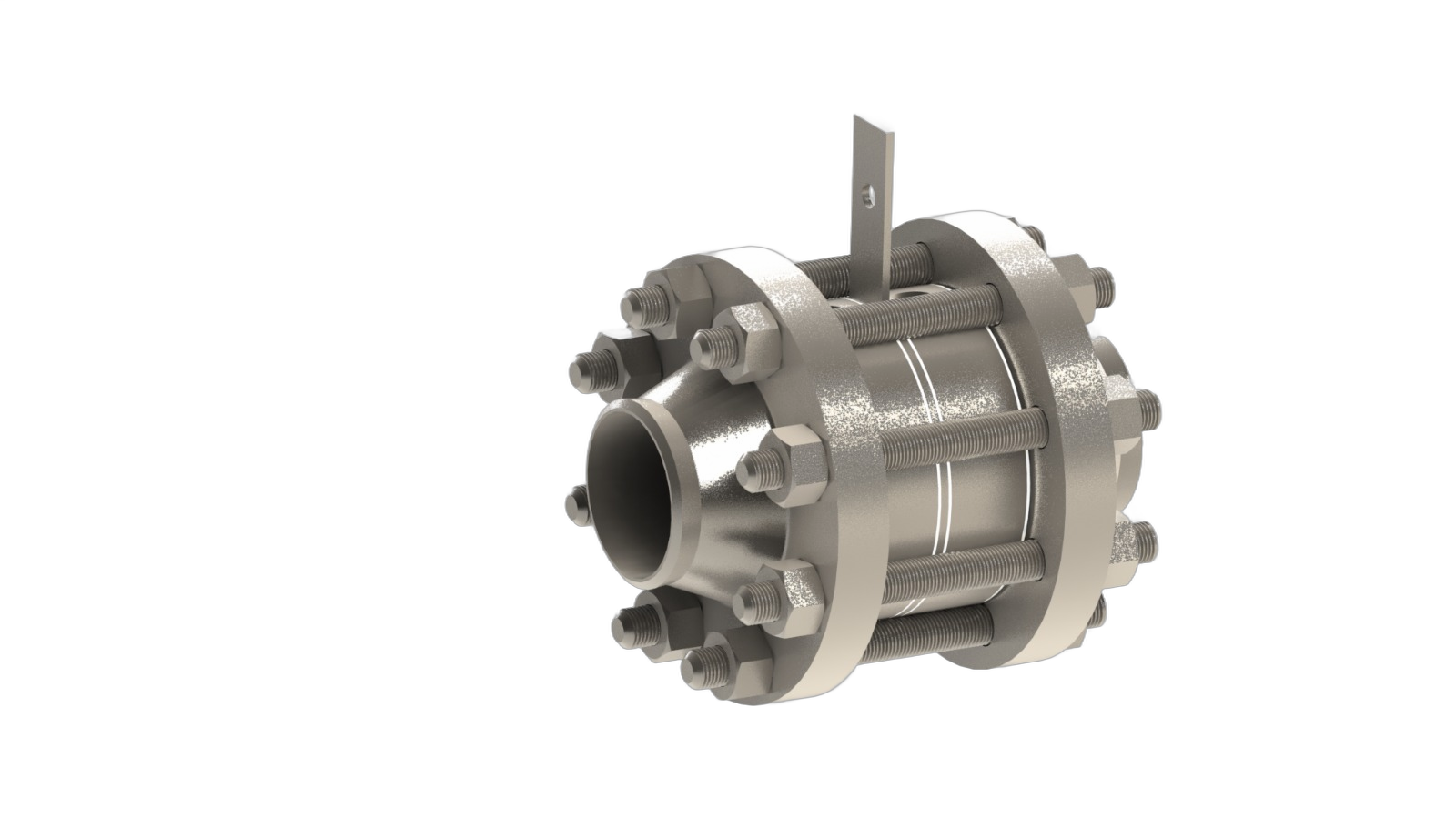
BETFLOW Carrier Ring Orifice Assembly (BF-CRA)
The Carrier Ring Orifice Assembly is a differential pressure (DP) flow measurement device in which the orifice plate is mounted inside a carrier ring (also called an orifice fitting or holder), which in turn is installed between standard pipe flanges. This design allows the orifice plate to be inspected, cleaned, or replaced quickly, without disturbing the pipe flanges or requiring realignment, making it well suited to applications where the plate needs periodic recalibration or inspection.
Pressure tappings are incorporated directly into the carrier ring, simplifying installation compared to a standard flanged orifice assembly.
Bhavyam offers all carrier ring orifice assemblies under the BETFLOW range of products. Design & engineering is done as per global standards to meet challenging process demands. Manufacturing of all carrier ring orifice assemblies is carried out as per ISO 5167 / ASME MFC-3M / AGA 3 / ASME B16.5 standards.
Specifications
- Orifice Plate type: Square Edged Concentric Orifice Plate, Eccentric Orifice Plate, Quadrant Edge / Quarter Circle Orifice Plate, Conical Entrance Orifice Plate, Segmental Orifice Plate
- Plate Material: SS316 & SS316L as standard. SS304, SS304L, Hastelloy, Monel, Inconel, Titanium, PTFE, PVC, PP, and others on request
- Ring / holder material: carbon steel, stainless steel 304/316, duplex, and others on request
- Plate Thickness: 3.18mm, 6.35mm, 12.7mm as standard, and others on request
- Vent / Drain: vent or drain holes are provided as per process requirement
- Orifice Flange type: as per ASME B16.36, ASME B16.5, ASME B16.47 Series A/B. Flanges as per EN standard are also provided on request
- Flange Material: ASTM A105 & ASTM A182 F316 as standard. ASTM A182 F304, ASTM A182 F11, ASTM A182 F22, PTFE, and others on request
- Pressure Tapping: flange taps, corner taps, pipe taps, radius taps
- Gaskets: CNAF, SS spiral wound with grafoil filler as standard. PTFE, graphite, and others on request
- Stud / Nut: ASTM A193 Gr. B7 / A-194 Gr. 2H as standard, other material on request
- Jack Screw: ASTM A193 Gr. B7 as standard, other material on request
- Testing: PMI, Hydrotest, Dye Penetration Test, Radiography, Flow Calibration, and others on request.
Applications we serve.
- Flow measurement installations requiring frequent plate inspection or cleaning
- Services where the orifice plate needs periodic recalibration or bore change
- Gas and liquid pipelines where minimal downtime for maintenance is required
- Retrofitting flow measurement into existing standard-flange piping
- Process plants where repeated plate removal with minimal disruption is needed
Frequently asked questions.
What is a carrier ring orifice assembly and how is it different from a standard orifice assembly?
In a standard orifice plate assembly, the plate is held directly between a pair of orifice flanges, so removing it means separating the flanges. In a carrier ring assembly, the plate sits inside a separate ring or holder, which stays installed between standard pipe flanges. The plate can then be removed through the holder, without disturbing the main pipe flanges.
What is the main advantage of a carrier ring design?
The main advantage is faster and simpler plate removal and replacement, which reduces downtime for inspection, cleaning, or recalibration. It also removes the need for special orifice flanges, since the carrier ring is installed between standard pipe flanges.
Can a carrier ring orifice assembly be installed on existing piping?
Yes. Since it uses standard pipe flanges rather than dedicated orifice flanges, a carrier ring assembly is often easier to retrofit into an existing pipeline for flow measurement, provided the line size and flange rating are compatible.
Need help with your flow measurement challenge?
Share your fluid properties, line size, flow rate and operating conditions, our engineers respond with a quotation