
Compact Orifice Assembly
A differential pressure flow measurement device integrating orifice plate, pressure tappings, and flow conditioning in a single short meter run — accurate measurement for skid-mounted and space-constrained installations.
View Specifications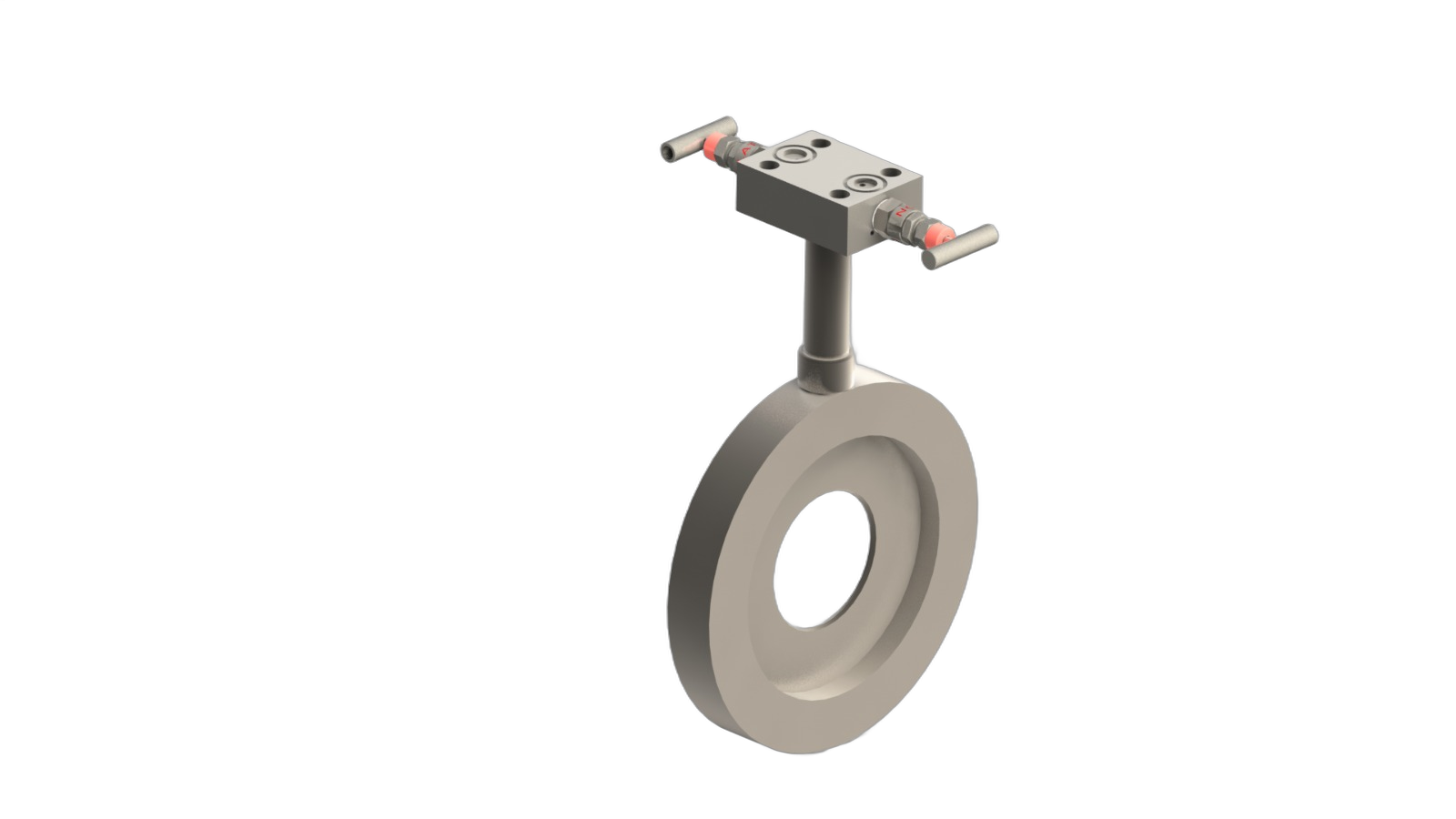
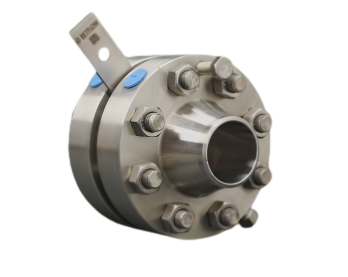
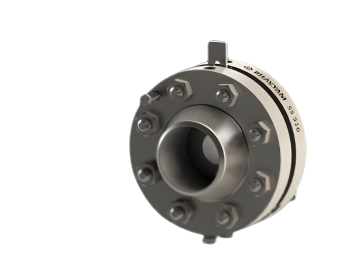
BETFLOW Compact Orifice Assembly (BF-COA)
The Compact Orifice Assembly is a differential pressure (DP) flow measurement device that integrates the orifice plate, pressure tappings, and flow conditioning elements within a single, short meter run. This reduces the overall installation length compared with a conventional orifice plate assembly, which typically needs long upstream and downstream straight pipe runs to achieve a stable flow profile.
By combining flow conditioning with the orifice plate in one compact spool, the assembly delivers accurate measurement in a fraction of the pipe length, making it well suited to skid-mounted systems, offshore platforms, and other space-constrained installations.
Bhavyam offers all compact orifice assemblies under the BETFLOW range of products. Design & engineering is done as per global standards to meet challenging process demands. Manufacturing of all compact orifice assemblies is carried out as per ISO 5167 / ASME MFC-3M / AGA 3 / ASME B16.5 standards.
Specifications
- Orifice Plate type: Square Edged Concentric Orifice Plate, Eccentric Orifice Plate, Quadrant Edge / Quarter Circle Orifice Plate, Conical Entrance Orifice Plate, Segmental Orifice Plate
- Plate Material: SS316 & SS316L as standard. SS304, SS304L, Hastelloy, Monel, Inconel, Titanium, PTFE, PVC, PP, and others on request
- Plate Thickness: 3.18mm, 6.35mm, 12.7mm as standard, and others on request
- Tapping types: integral flange taps or pipe taps
- Vent / Drain: vent or drain holes are provided as per process requirement
- Orifice Flange type: as per ASME B16.36, ASME B16.5, ASME B16.47 Series A/B. Flanges as per EN standard are also provided on request
- Flange Material: ASTM A105 & ASTM A182 F316 as standard. ASTM A182 F304, ASTM A182 F11, ASTM A182 F22, PTFE, and others on request
- Gaskets: CNAF, SS spiral wound with grafoil filler as standard. PTFE, graphite, and others on request
- Stud / Nut: ASTM A193 Gr. B7 / A-194 Gr. 2H as standard, other material on request
- Jack Screw: ASTM A193 Gr. B7 as standard, other material on request
- Testing: PMI, Hydrotest, Dye Penetration Test, Radiography, Flow Calibration, and others on request.
Applications we serve.
- Skid-mounted metering packages with limited pipe length
- Offshore platforms and FPSOs where space and weight are constrained
- Retrofitting flow measurement into existing piping with short straight runs
- Gas and liquid custody transfer skids
- Compact metering stations at wellheads and gathering lines
- Process plants with congested piping layouts
Frequently asked questions.
What makes a compact orifice assembly different from a standard orifice plate assembly?
A standard orifice plate assembly needs a long straight length of pipe upstream and downstream to develop a stable flow profile before and after the plate. A compact orifice assembly integrates a flow conditioner within the same spool as the orifice plate, so it achieves an accurate measurement within a much shorter overall length.
Is a compact orifice assembly suitable for high-pressure or offshore applications?
Yes. Compact orifice assemblies are commonly used on offshore platforms and FPSOs, where reducing pipe length and weight is important, and they are available in pressure classes suited to high-pressure gas and liquid service.
What information is needed to size a compact orifice assembly?
We need the fluid type and phase, flow rate (minimum, normal, maximum), operating pressure and temperature, line size, flange rating, and details of the nearest upstream fitting or disturbance, along with the available installation length, so the conditioning and bore can be sized together.
Need help with your flow measurement challenge?
Share your fluid properties, line size, flow rate and operating conditions, our engineers respond with a quotation